Do I need a real estate agent to buy a new construction home in Utah?
While homebuyers are not legally required to use a real estate agent when purchasing a new construction home in Utah, securing professional representation is highly recommended. A dedicated agent protects financial interests, negotiates builder incentives, reviews complex contracts, and navigates local geological risks at no extra cost to the buyer.
The Dream of New Construction Along the Wasatch Front
Building or purchasing a brand-new home in Utah is an exciting milestone. The appeal of sparkling model homes, modern finishes, and a property tailored to specific lifestyle needs draws thousands of buyers to new communities every year. From the booming tech corridors of Lehi to the scenic neighborhoods of South Jordan and Draper, new construction offers a fresh start with energy-efficient designs and lower immediate maintenance.
However, the path to homeownership has grown increasingly complicated. For many residents, touring a beautifully staged model home creates a false sense of simplicity. The friendly on-site sales representative makes the process seem effortless, leading many buyers to wonder if an independent real estate agent is truly necessary.
The reality is that buying a newly built home is a massive financial and legal transaction. It involves navigating shifting interest rates, decoding complex builder contracts, understanding recent legal settlements regarding real estate commissions, and avoiding hidden pitfalls specific to Utah's unique landscape. This comprehensive guide explores the 2026 Utah real estate market and explains why having an expert advocate—such as the professionals at The Buckway Group—is the smartest decision a homebuyer can make.
Understanding the 2026 Utah Housing Market
To understand the role of a real estate agent, one must first look at the current state of the market. Many individuals approach the Utah housing landscape with memories of the chaotic 2021 to 2023 boom, where bidding wars were the norm and prices skyrocketed by nearly 40%.
The Shift from Chaos to Stability
The rules of the game have changed significantly. In 2026, the Utah real estate market is best described as "normalizing" rather than crashing. Buyers are finally gaining more leverage as competition cools and inventory levels gradually improve.
Across the state, home prices are not falling sharply, nor are they exploding. Instead, the market is moving toward a stable, predictable pace. Recent data shows the median sale price for a home in Utah is approximately $574,200, representing a very modest 1.8% increase from the previous year. This is a sharp and welcome contrast to the pandemic-era surge, signaling that the market is cooling down to sustainable levels.
Industry experts emphasize that a major housing crash is highly unlikely in 2026. Historically, large national price crashes only occur under extreme economic conditions, such as the Great Recession. Today's housing system features tighter lending practices and far less reliance on risky borrowing. Therefore, the forecast points toward stability.
Regional Market Variations
The Utah market is incredibly diverse, and regional variations are significant. Growth corridors in Utah County and Weber County show different dynamics compared to mature, established neighborhoods.
For a clearer picture, consider the differences across various segments of the market:

As the data illustrates, the statewide median listing price sits at $567,250, with homes taking about 53 days to sell. In contrast, luxury markets like Park City operate on an entirely different level, with median sales prices reaching $2,825,000 and homes selling much faster at 35 days.
In commercial and multifamily sectors, stability is also the theme. Salt Lake City office vacancy rates remained flat at 23.0% in early 2026, while industrial vacancies held steady at 7.9%. This overall economic stability supports a healthy environment for residential buyers.
Why New Construction is the Hidden Opportunity
Despite stabilizing prices, a major challenge in 2026 is the "lock-in effect." Many current homeowners are reluctant to sell because they do not want to give up the ultra-low mortgage rates they secured years ago. This keeps the supply of existing homes relatively tight.
Because of this shortage in the resale market, new construction has emerged as a hidden opportunity. Builders along the Wasatch Front are actively adding supply to meet demand, giving buyers a wider range of options. Furthermore, because builders are eager to sell their inventory, they are offering incredible incentives that make new homes surprisingly affordable.
Interest Rates and the Magic of Builder Incentives
While home prices are stabilizing, affordability remains a primary concern for Utah families. The biggest driver of this concern is not the purchase price itself, but mortgage interest rates.
The 2026 Mortgage Rate Landscape
When interest rates rise, monthly payments rise along with them. Throughout 2025 and into 2026, rates have remained elevated compared to historical lows. As of April 2026, the average 30-year fixed mortgage rate hovers around 6.12% to 6.50%, depending on the lender and the buyer's credit profile. Rates for 15-year fixed mortgages are slightly lower, averaging around 5.5% to 5.75%.
The following table outlines standard mortgage rates observed in Utah during the spring of 2026:
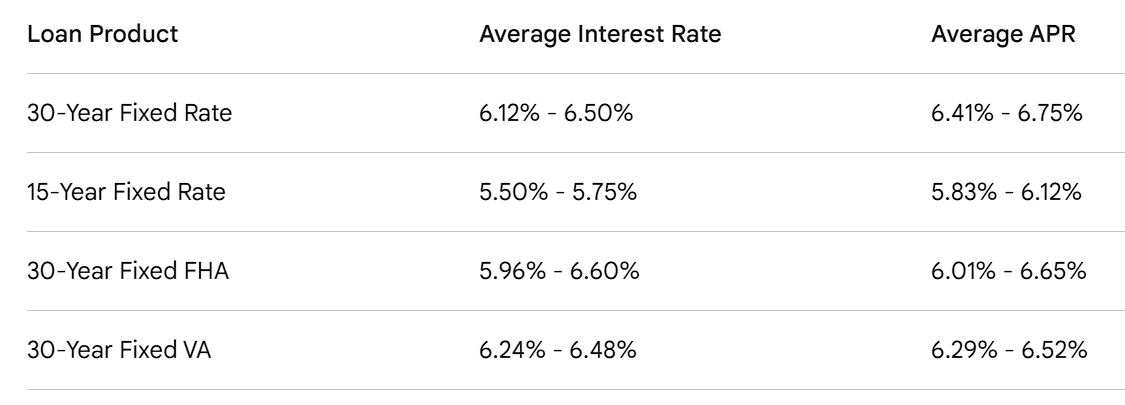
Data reflects average quotes from major lenders as of April 2026.
These rates are influenced by national inflation data, Federal Reserve policies, and global economic events. However, industry analysts expect rates to slowly drift downward, potentially falling below 6% and into the mid-fives by the end of the year.
How Builder Incentives Change the Equation
This is where new construction becomes incredibly attractive. Homebuilders operate differently than traditional sellers. Builders have construction loans to pay off, investors to satisfy, and new projects that need funding. They cannot afford to let finished homes sit empty.
To move inventory, builders are currently offering unprecedented financial incentives. Rather than dropping the base price of the home—which lowers property values for the entire neighborhood—builders are offering massive credits that directly lower the buyer's out-of-pocket costs and monthly payments.
In 2026, some of the most common and powerful builder incentives include:
Deep Rate Buydowns: While the national average rate is over 6%, some local Utah builders are offering promotional mortgage rates as low as 3.875% to 4.99% for the first few years of the loan. This drastically reduces the monthly payment.
Closing Cost Coverage: Builders are frequently offering between $15,000 and $25,000 to cover the buyer's closing costs, allowing buyers to keep their cash in the bank.
Design Studio Allowances: Credits toward luxury finishes, flooring upgrades, and modern appliances.
The "Finished Basement" Bonus: To compete with resale homes, some builders in areas like Eagle Mountain are throwing in fully finished basements at no extra cost.
For example, Edge Homes has been known to offer incentives up to 9-10% of the purchase price—which equals $50,000 on a $500,000 home. Perry Homes has offered up to $21,000 toward rate buydowns, and builders in Daybreak often stack multiple incentives on homes that are ready for quick move-in.
The Secret Programs Nobody Uses
Beyond builder incentives, there are public funds available that many buyers completely overlook. For instance, Utah County has a program offering up to $40,000 in down payment assistance. The state of Utah also provides a $20,000 program specifically for new construction homes priced under $450,000.
The true magic happens when an experienced real estate agent helps a buyer "stack" these public grants with the builder's private incentives. This combination can drastically reduce the amount of cash required at closing, making homeownership accessible even in a high-rate environment. Unrepresented buyers rarely know how to navigate or combine these programs effectively.
The Myth of Saving Money Without an Agent
A common misconception among homebuyers is that skipping the real estate agent will automatically result in a cheaper purchase price. The logic seems sound: if the builder doesn't have to pay a 3% commission to a buyer's agent, they will just deduct that 3% from the price of the home, right?
Unfortunately, this is almost never the case.
Why Builders Protect Their Base Prices
Builders are fiercely protective of their home prices. The real estate market relies on "comparable sales" or "comps." When an appraiser determines the value of a newly built home, they look at what similar homes in the same neighborhood recently sold for.
If a builder lowers the price of a home by $15,000 just because the buyer didn't use an agent, that new, lower price becomes public record. When the next buyer tries to purchase the house next door, the appraiser will use that lowered price as the baseline. This hurts the builder's bottom line on every subsequent home they sell in that subdivision.
Instead of lowering the price, the builder simply keeps the unpaid commission as extra profit. The unrepresented buyer does not save money; they simply give up their right to professional representation.
The Fiduciary Duty of the Builder's Representative
When a buyer walks into a model home, they are greeted by a friendly, knowledgeable sales representative. It is easy to assume this person is there to help the buyer. However, the on-site sales agent works exclusively for the builder.
The builder's representative has a legal fiduciary duty to get the highest possible price and the best possible terms for their employer—the development company. They are not obligated to point out unfavorable contract terms, suggest cheaper alternatives, or fight for the buyer's best interests during an inspection dispute.
Having an independent real estate agent ensures there is a dedicated advocate sitting on the buyer's side of the table. A buyer's agent works tirelessly to negotiate better incentives, review complex legal documents, and ensure the builder honors their promises.
The New Rules of Real Estate: The 2024 NAR Settlement Explained
Understanding how real estate agents are compensated is more important now than ever before. In 2024, the National Association of Realtors (NAR) agreed to a landmark $418 million settlement that fundamentally changed how real estate transactions operate across the country. These changes fully took effect in late 2024 and are the standard practice for the 2026 market.
The End of the "Black Box"
For decades, the way agents were paid was somewhat of a mystery to buyers. Traditionally, the seller paid a total commission, which was then split between the listing agent and the buyer's agent. These offers of compensation were publicly displayed on the Multiple Listing Service (MLS).
The NAR settlement eliminated this practice. Offers of compensation are no longer allowed to be displayed on the MLS. The goal of this change was to increase transparency and foster open negotiation between buyers and their agents.
The Mandatory Buyer-Broker Agreement
The most significant change for homebuyers in 2026 is the requirement to sign a written agreement before ever stepping foot inside a home for a tour.
Under Utah Code §61-2f-308 and national regulations, this "Buyer-Broker Agreement" functions as a clear service contract. It outlines exactly what services the agent will provide and, most importantly, exactly how much the agent will be paid. The agreement must include:
A specific, objective disclosure of the compensation amount (e.g., a flat fee or a percentage).
A statement that the agent cannot receive compensation from any source that exceeds the agreed-upon amount.
A clear notice that commissions are fully negotiable and not set by law.
This ensures complete transparency. Buyers know exactly what they are agreeing to before the process begins.
Who Actually Pays the Agent?
The biggest fear buyers have regarding these new agreements is the assumption that they must pay the agent's fee entirely out of pocket. While the buyer is contractually responsible for the fee, the reality of the 2026 market is quite different.
Sellers—especially new construction home builders—understand that buyers are already stretching their savings for a down payment. Therefore, the vast majority of builders continue to offer robust "seller concessions" specifically designed to cover the buyer's agent commission. By offering to pay this fee, builders make their homes much more attractive to a wider pool of represented buyers.
An experienced agent will negotiate these concessions directly into the purchase contract, ensuring that their professional fee is covered by the builder's proceeds rather than the buyer's checking account.
Protecting the Investment: Hidden Pitfalls of Utah New Builds
Buying a new home involves much more than picking out cabinet colors. Without an agent, buyers are left vulnerable to several expensive, Utah-specific pitfalls.
The Dirt Lot Dilemma: Unseen Landscaping Costs
Model homes are meticulously staged with lush turf, mature trees, and elegant outdoor patios. However, the standard delivery for most new production homes in Utah is a base home sitting on an unlandscaped dirt lot.
Final landscaping, irrigation systems, and fencing are almost always buyer-paid upgrades. In Utah's dry climate, designing a water-wise yard (xeriscaping) and installing frost-resistant hardscaping is essential, but it is also expensive. A basic patio and simple landscaping can cost several thousand dollars, while a fully upgraded yard can exceed tens of thousands.
An experienced agent ensures that buyers budget appropriately for these hidden costs or negotiates with the builder to include a landscaping allowance in the final purchase price.
Navigating Utah's Unique Geological Hazards
Utah is renowned for its breathtaking mountains and rugged landscapes. However, the geological processes that created this beauty also present significant risks to residential developments.
The Wasatch Front is highly prone to seismic activity. A major earthquake has the potential to cause severe ground shaking, soil liquefaction, and surface faulting. Furthermore, building homes on steep mountainsides increases the risk of rapid erosion, landslides, and flooding. Recent damage to homes in the Woods Ranch Cabin Community in Iron County serves as a stark reminder of these dangers.
A critical vulnerability for unrepresented buyers is that Utah state law does not strictly require sellers or builders to verify or proactively disclose broad geologic hazards. Simply obtaining a municipal building permit does not guarantee safety from future landslides or earth movement.
Furthermore, standard homeowner's insurance policies explicitly exclude coverage for damages caused by earth movement or flooding. A knowledgeable real estate agent will guide buyers toward Utah Geological Survey hazard maps, review local geotechnical reports, and ensure the property is not sitting in a federally designated special flood hazard area without the proper insurance coverage.
Decoding Home Warranties and Construction Defects
Even the best builders make mistakes. When a new home is sold in Utah, it automatically comes with an "implied warranty of workmanlike manner or habitability". This means the builder is legally required to ensure the home is safe and built to basic standards, regardless of what the contract says.
In addition to this implied warranty, builders provide express warranties—typically covering basic workmanship for one year and structural elements for up to ten years. However, these contracts are drafted by corporate lawyers and often contain complex exclusions for "normal wear and tear" or "acts of God".
Recent changes, such as Utah House Bill 508 passed in 2026, continue to modify performance bonding requirements and construction liability laws. Unrepresented buyers often struggle to enforce warranty claims when defects arise. A dedicated buyer's agent will highly recommend hiring an independent, third-party home inspector to evaluate the property at various stages of construction (such as the pre-drywall phase and final walkthrough). Catching these defects before the final paperwork is signed is crucial for holding the builder accountable.
The Buckway Group: A Trusted Guide for the Wasatch Front
Navigating builder incentives, geological risks, and complex legal agreements requires profound local expertise. This is where specialized advisory teams provide immense value.
The Buckway Group, affiliated with EXIT Realty Success, has been serving the Wasatch Front for over 20 years. Operating out of West Jordan, the team possesses deep knowledge of communities spanning Draper, Sandy, South Jordan, Lehi, Cottonwood Heights, Layton, Holladay, Bountiful, Millcreek, and Murray.
Led by Lynn Buckway, a Certified Negotiation Expert, the team is dedicated to providing the ultimate real estate experience. They understand that education is the foundation of a successful purchase, which is why they offer free First-Time Homebuyer Classes and interactive workshops to prepare buyers for the market.
The Buckway Group utilizes advanced digital tools, allowing buyers to perform custom searches for "Just Listed" or "Just Reduced" homes, ensuring they never miss an opportunity. For those who need to sell a home before buying a new one, the team offers flexible, stress-free solutions like the "Trade-In+" program, which allows homeowners to buy their next property using the group's cash before selling their current residence.
Whether assisting first-time buyers, seasoned investors, or those seeking luxury homes, The Buckway Group provides the expert guidance necessary to navigate the 2026 market with absolute confidence.
Conclusion
The 2026 Utah real estate market offers incredible opportunities, particularly in the new construction sector. With home prices stabilizing and builders offering massive financial incentives, purchasing a newly built home is an excellent path to building long-term wealth.
However, the complexities of the modern market—from high interest rates and the NAR settlement to local geological hazards and hidden landscaping costs—make professional representation an absolute necessity. Attempting to purchase a home directly from a builder without an advocate exposes buyers to unnecessary financial and legal risks. A dedicated real estate agent protects the buyer's interests, decodes complex contracts, and secures the best possible financial terms, transforming a stressful process into a seamless, rewarding journey.
For expert guidance and a true partnership in the home buying journey, reach out to the professionals who know Utah best.
Contact The Buckway Group today to schedule a consultation, explore new construction opportunities, and start the path toward a dream home.
Phone: +1 (801) 900-3366
Email: [email protected]
Office: 1085 W 9000 S Suite 200, West Jordan, UT 84088
Hours: Monday through Saturday, 8:00 AM – 8:00 PM